Print · recruiting
Driver card.
One card anyone at Peak can hand to a driver. It answers the three questions a driver actually asks, in that order: what does it pay, who do I call, where do I look. That is why the pay is the entire back rather than a line buried on the front, and why the front carries the driver page’s own words: a driver who scans the code lands on the sentence they just read. Four variants below, one type system; pick what to lead with.
AEditorial
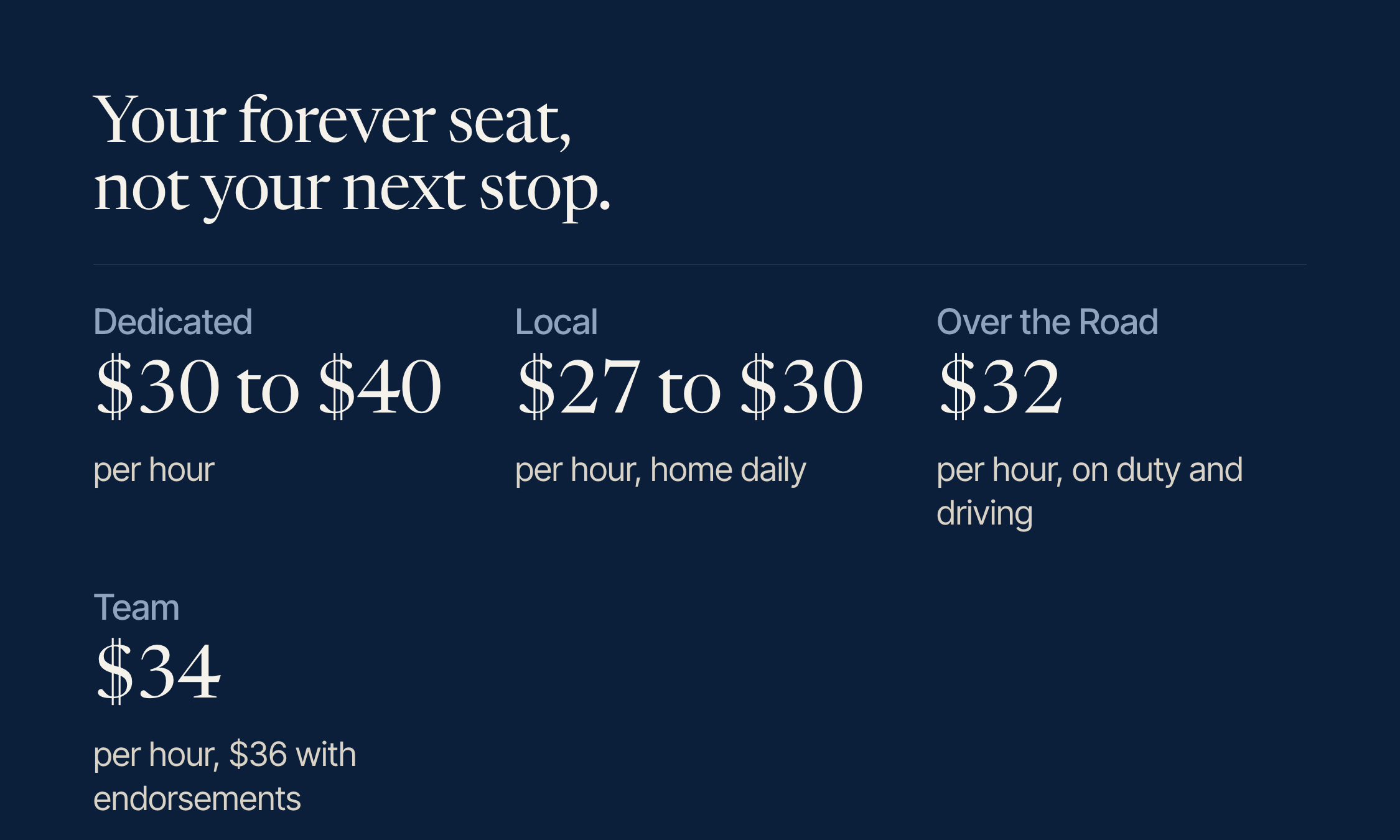
The redesign. The driver page’s own headline, the pay promise, the code. Night ground.
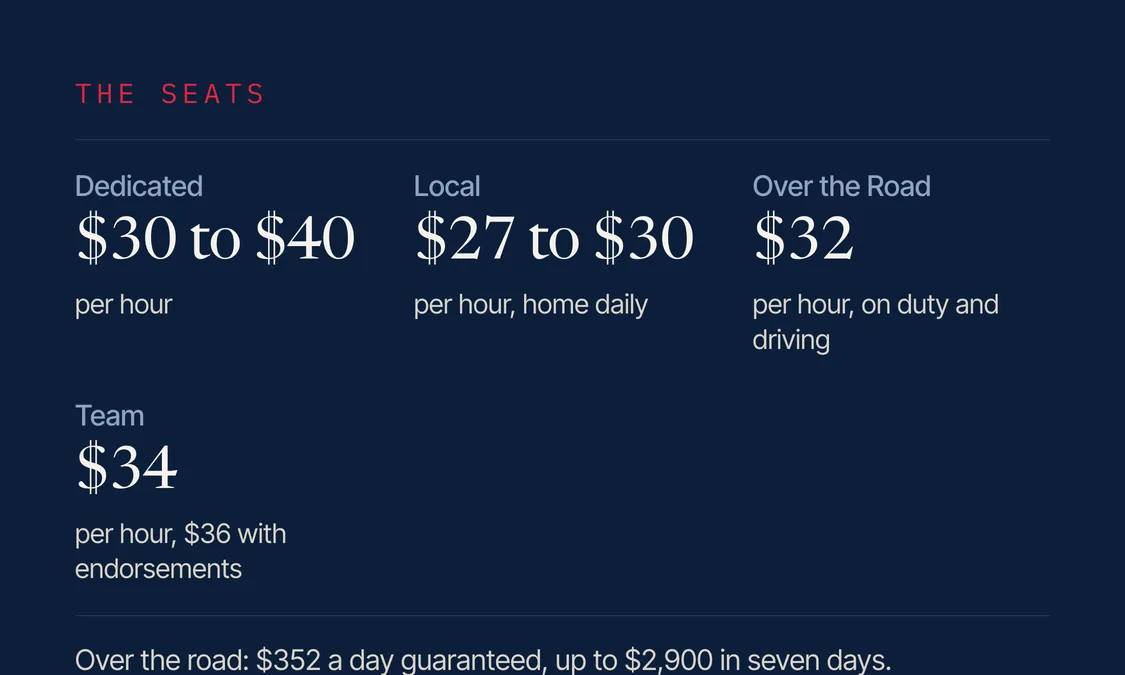
BRate forward
The number first. At a fuel desk the card has two seconds, and the figure is the strongest thing Peak can say. The headline moves to the back.
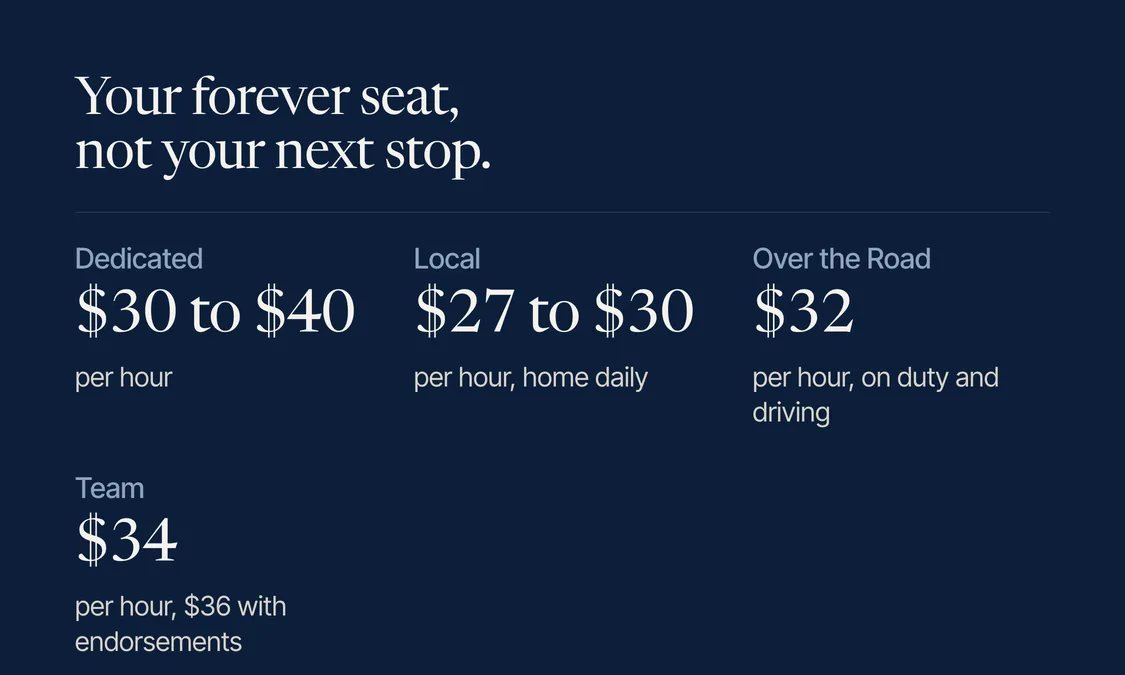
CPhoto
Peak’s own sleeper at golden hour, whole, in a panel on the right; the words and the code in the ink column. No wordmark: the mark is on the cab.
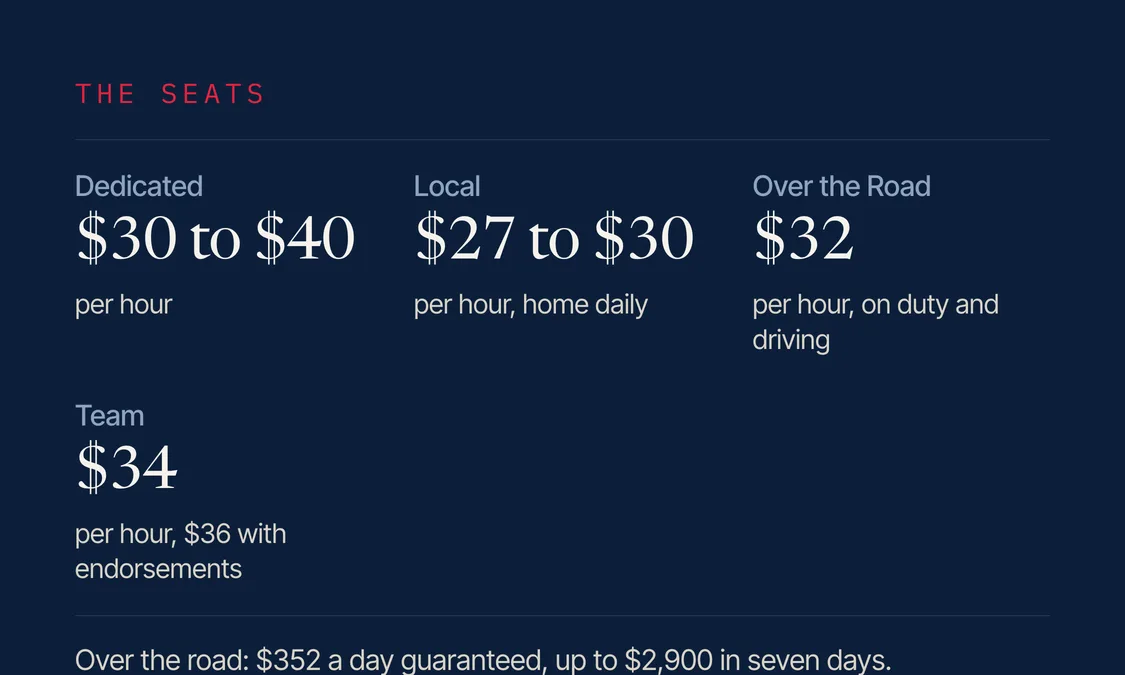
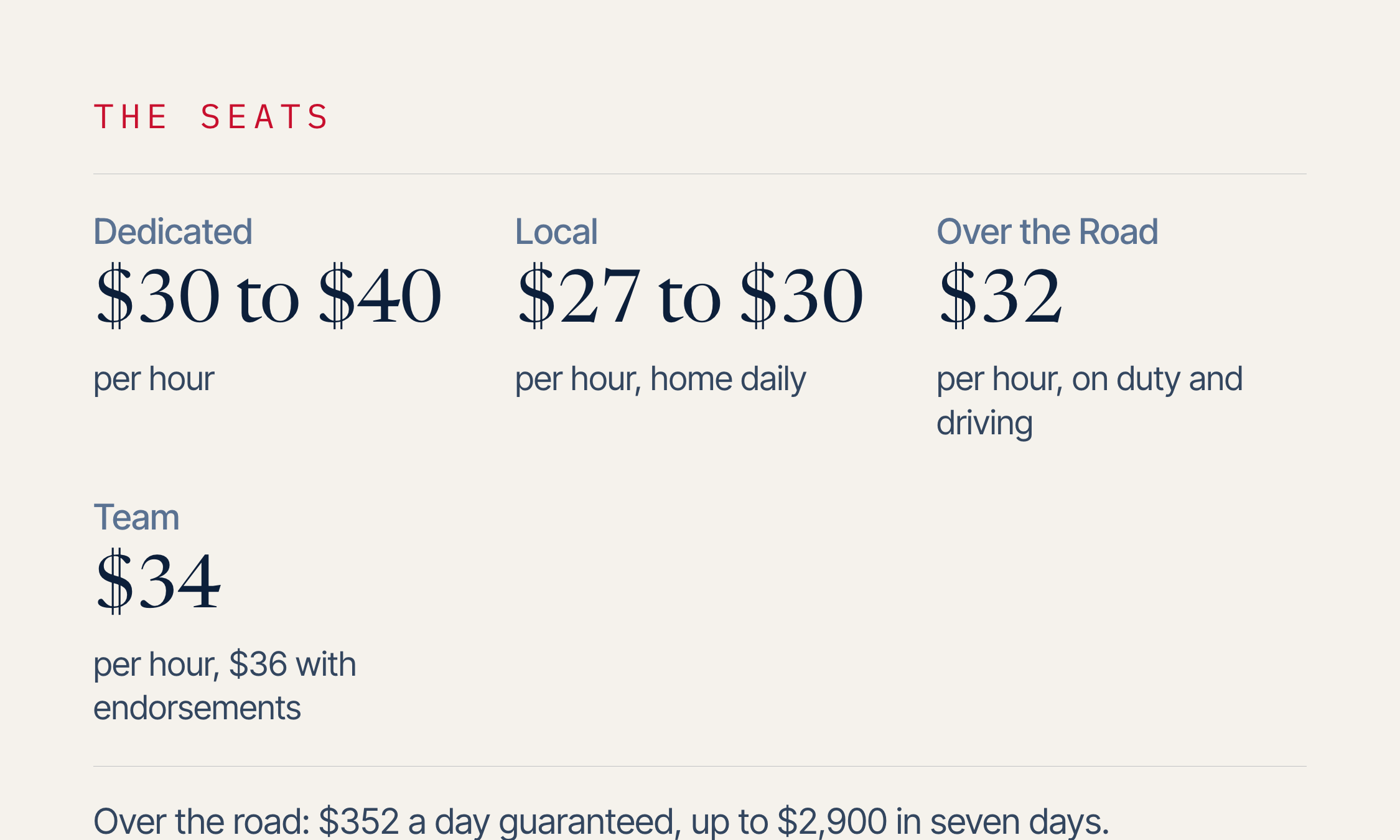
DPaper
The editorial card on paper ground, for a fuel desk or a job fair where a dark card disappears among dark cards.
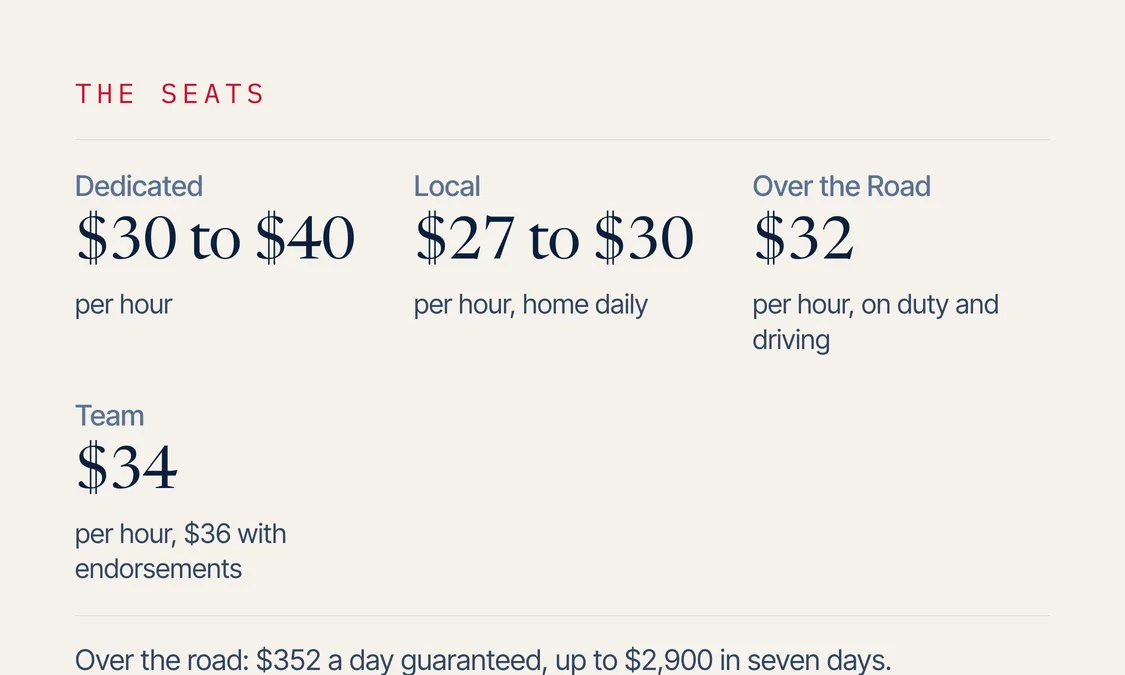




One type system, four cards
Newsreader for the headline and the numbers. The site’s sans, Inter Tight, for every supporting sentence, in sentence case. IBM Plex Mono only for the lockup and the URL, at one small size. The earlier card put a red uppercase mono sentence under a serif headline beside a mono URL, three voices at one weight, and it clashed. Every variant here shares the scale, so the choice between them is about what to lead with, not about type.
What the back says
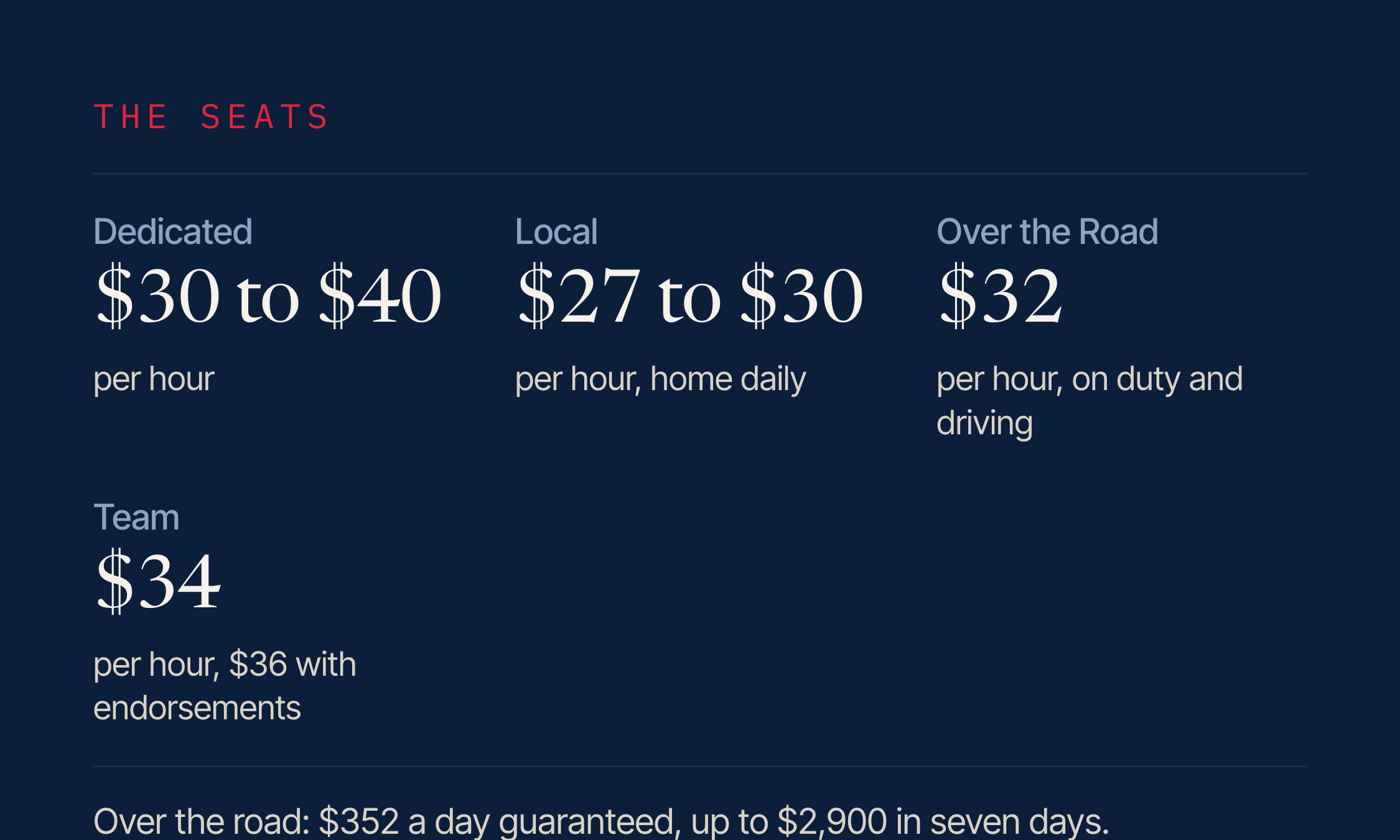
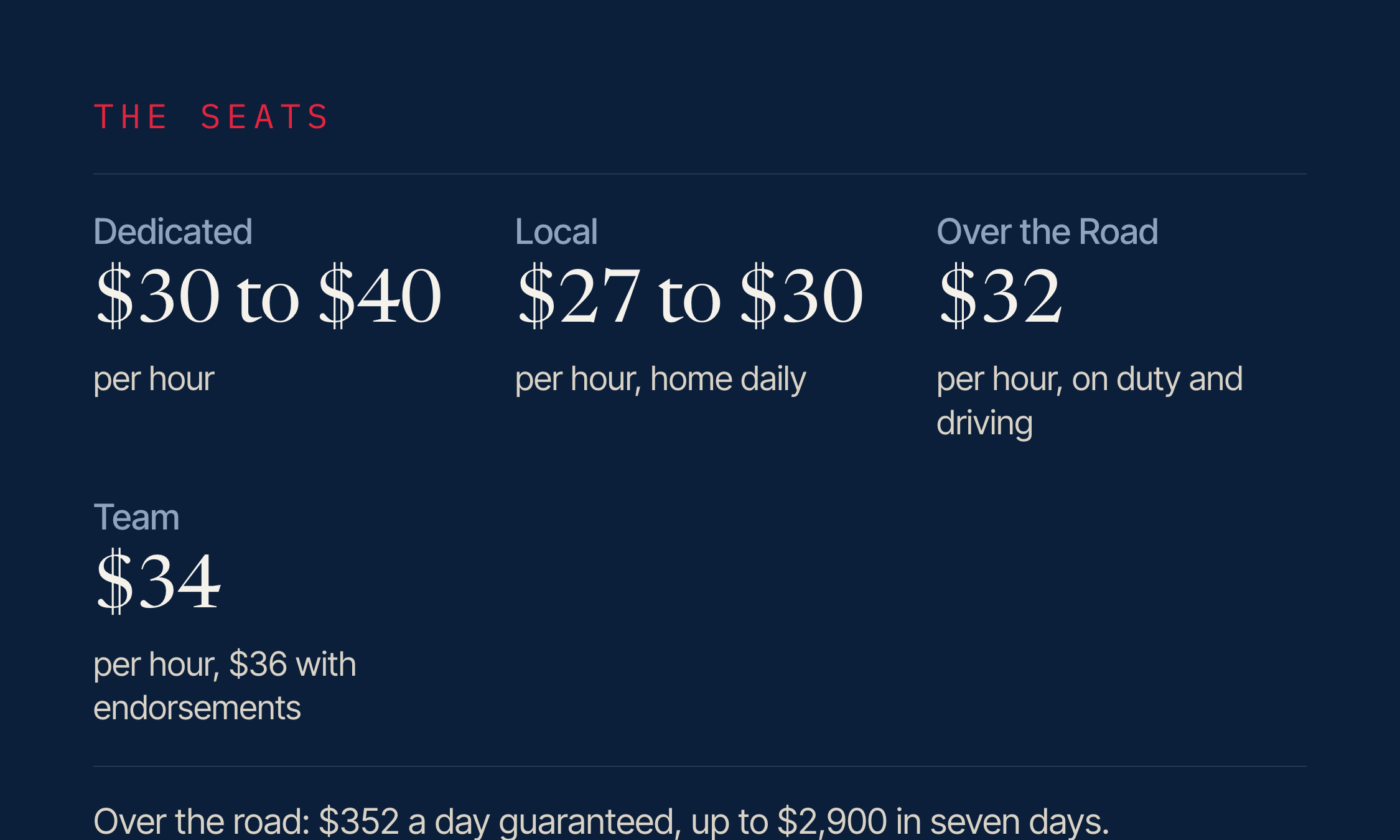
read from data/careers.tsDedicated
$30 to $40
per hour
Committed freight for one customer on a known schedule. The rate inside that range depends on the market and the type of project, and the job posting for the seat states which.
Local
$27 to $30
per hour, home daily
Home every day, running inside a single market between the airport, the dock, and the customer.
Over the Road
$32
per hour, on duty and driving
Paid on every HOS hour on duty or driving, not on the miles, with eleven hours ($352) per day guaranteed minimum. You pick the week as long as the truck runs five continuous days on average — up to $2,240 across five days at 70 hours, or up to $2,900 across seven if you stay out.
Team
$34
per hour, $36 with endorsements
Two drivers in one truck. Come as an established team, or Peak will pair you with a co-driver. Haz mat and tanker endorsements take the rate to $36 an hour.
The card carries the seat, the rate and the basis — not these descriptions. Four paragraphs on a 3.5 × 2 in back would need type around 5pt, which is under the floor in the print standard. The code is one scan from the full detail, and an unreadable card helps nobody.
Hand this to the printer
- Trim
- 3.5 × 2 in — US standard
- Artboard
- 3.75 × 2.25 in, 0.125 in bleed every edge
- Resolution
- 2250 × 1350 px at 600 dpi
- Type sizes
- Rates 12pt, headline 19pt, labels 6.8pt — nothing below 6.5pt
- Code
- Dark on a paper tile with its own quiet zone, not light on navy
- Ground
- Navy 900 #0c1f3a, edge to edge
Confirm before printing
- The number.Peak publishes no general company line, so this carries the HR & careers route from the contact record — a direct line. If there is a recruiting number meant for strangers, it belongs here instead.
- Where the code goes. It resolves to peaksup.com/careers/drivers, the live driver page since September 10, 2026. A card cannot be redeployed, so that URL has to keep answering for as long as a card is in a wallet.
Both are single constants at the top of scripts/build-cards.mjs. Change one line, run npm run build:cards.